



Surrey Hills Barn Conversion
Mac at Zep Architecture has completed a bespoke barn conversion within the protected (Green Belt) landscape of the Surrey Hills. The project received full planning approval.
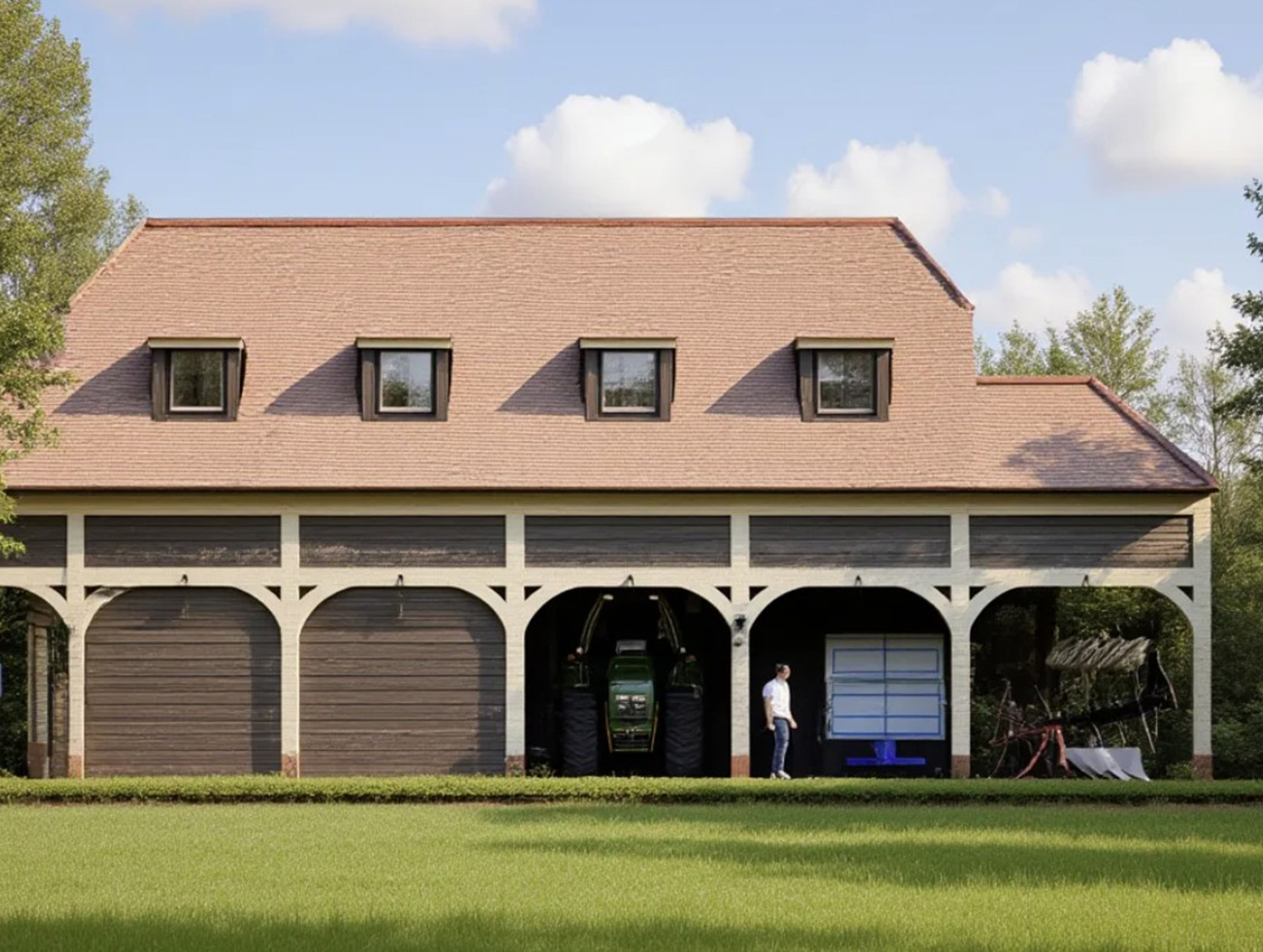
This bespoke barn conversion demonstrates exemplary architectural sensitivity within one of England’s most protected landscapes, successfully securing full planning approval within the stringent Green Belt designation. The building’s form draws directly from traditional Surrey barn typology, featuring a substantial hipped roof with a generous pitch that dominates the composition in the manner of historic farm structures where the roof was paramount to protecting stored crops and equipment. Four symmetrically placed dormer windows integrate with the roofscape, their gabled forms echoing the main roof geometry while providing habitable accommodation within the roof volume—a clever architectural strategy that maximises usable space without expanding the building’s footprint.
The colonnade of timber posts supporting the extended eaves creates a sheltered carport that serves both practical and aesthetic functions: it provides covered vehicle storage while lightening the building’s visual mass and maintaining the characteristic openness of traditional barns with their through-passages and open-sided storage bays.
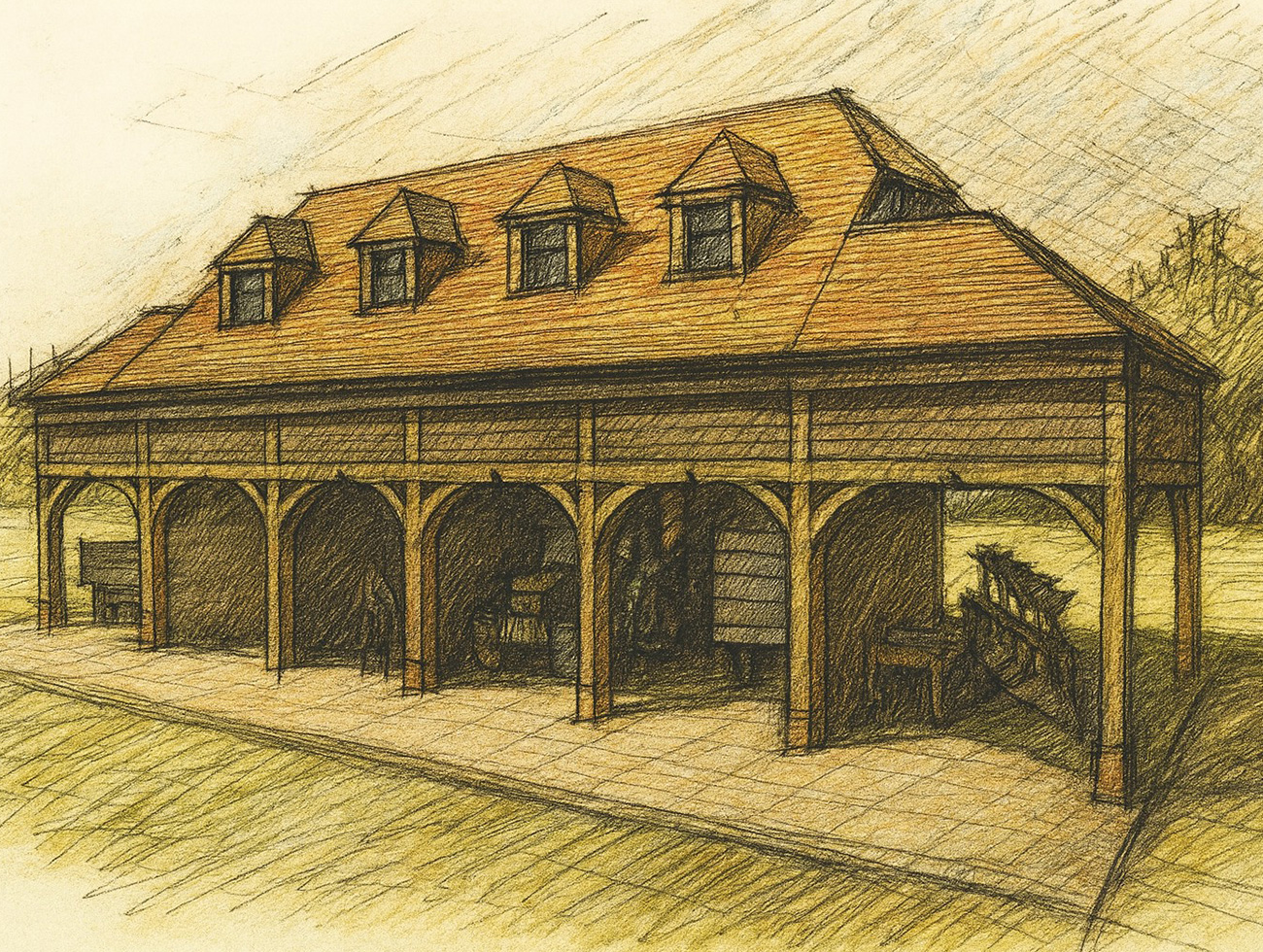
The interior design approach capitalizes on the generous volumes created by the barn’s agricultural proportions, transforming utilitarian space into comfortable living areas while celebrating the structural honesty of the timber frame. The ground floor beneath accommodates vehicle storage with 2 closed bays for secure storage and hobby rooms.
The first floor above benefits from the substantial roof volume, with exposed timber trusses, purlins, and rafters which honor the building’s barn heritage. The four dormer windows flood the interior with natural light from multiple orientations. The interior design employs a material palette that balances rustic authenticity with contemporary comfort: reclaimed or new oak flooring, lime-washed plaster walls that allow the building to breathe.
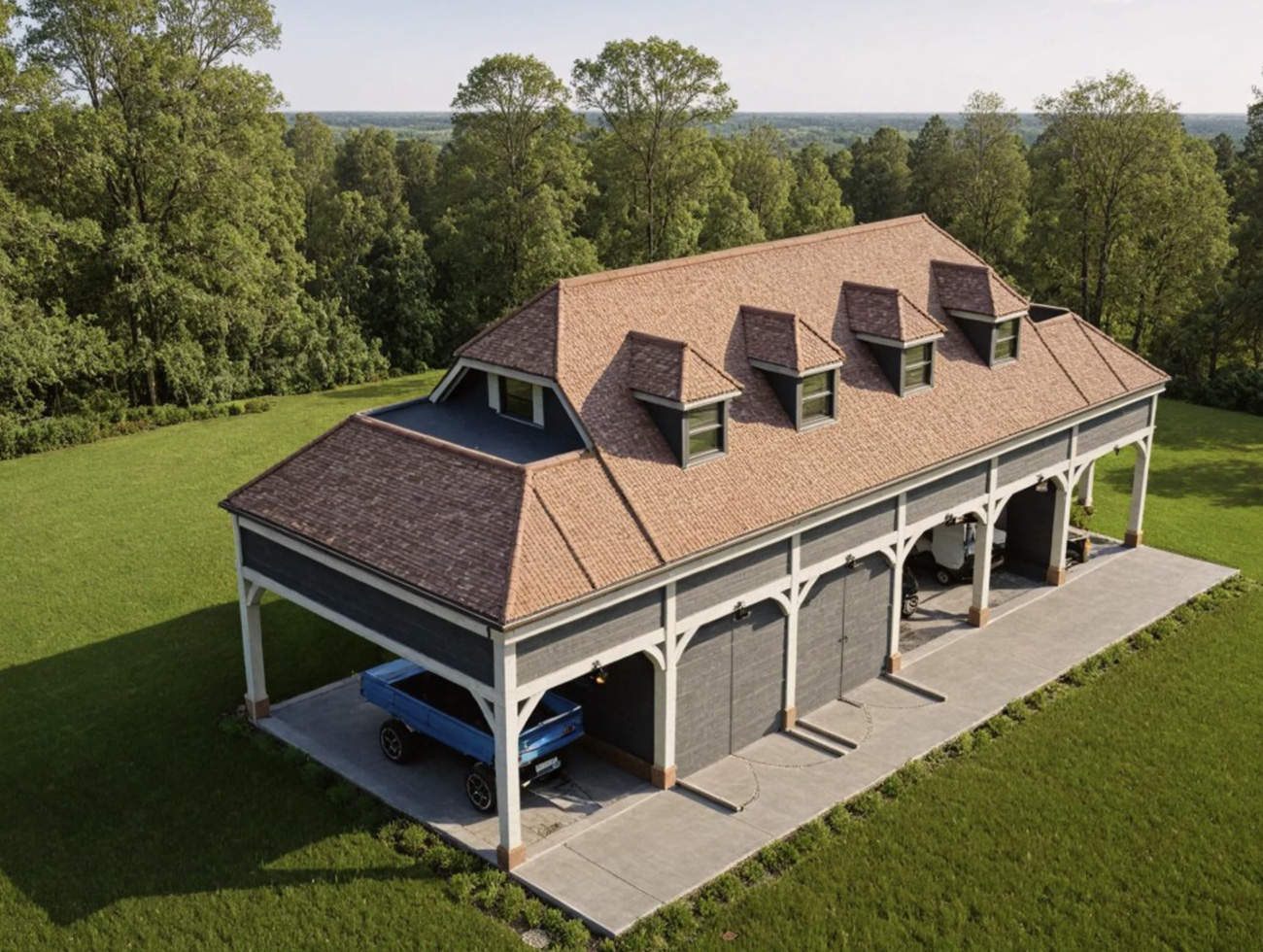
The engineered timber frame system provides the structural efficiency required for the generous clear spans while maintaining the visual authenticity of traditional barn construction. Timber posts made from structural oak support primary beams that carry the roof load, with the decorative knee braces contributing structural bracing through traditional mortise and tenon joinery or serving purely aesthetic purposes to reinforce the agricultural character.
The hipped roof construction requires careful carpentry at the corners where multiple roof planes converge, with traditional cut roof carpentry or contemporary truss systems spanning the interior to create the open plan spaces expected in a barn conversion while supporting the dormer structures above. The clay tile roof installation demands skilled craftsmanship, with each tile hand-laid and battened to achieve proper weatherproofing and the characteristic undulating texture of traditional roofing, while modern breathable membranes, insulation layers, and ventilation systems ensure contemporary thermal performance invisible from the exterior.
The four dormer windows represent complex junctions requiring meticulous lead flashing and weatherproofing details where they penetrate the main roof plane, with their own miniature hipped roofs adding construction complexity and requiring coordination between carpenters and roofers. The horizontal timber cladding system wraps the upper level with boards
Foundation work navigated Green Belt regulations regarding minimal ground disturbance, using reinforced concrete pad foundations beneath each post position rather than continuous strip footings to minimise site impact and preserve existing ground levels. Throughout construction, building control approval would have required compliance with contemporary standards for thermal performance, fire safety, and accessibility. Surrey Hills greenbelt planning required a Preliminary Ecological Appraisal (PEA).